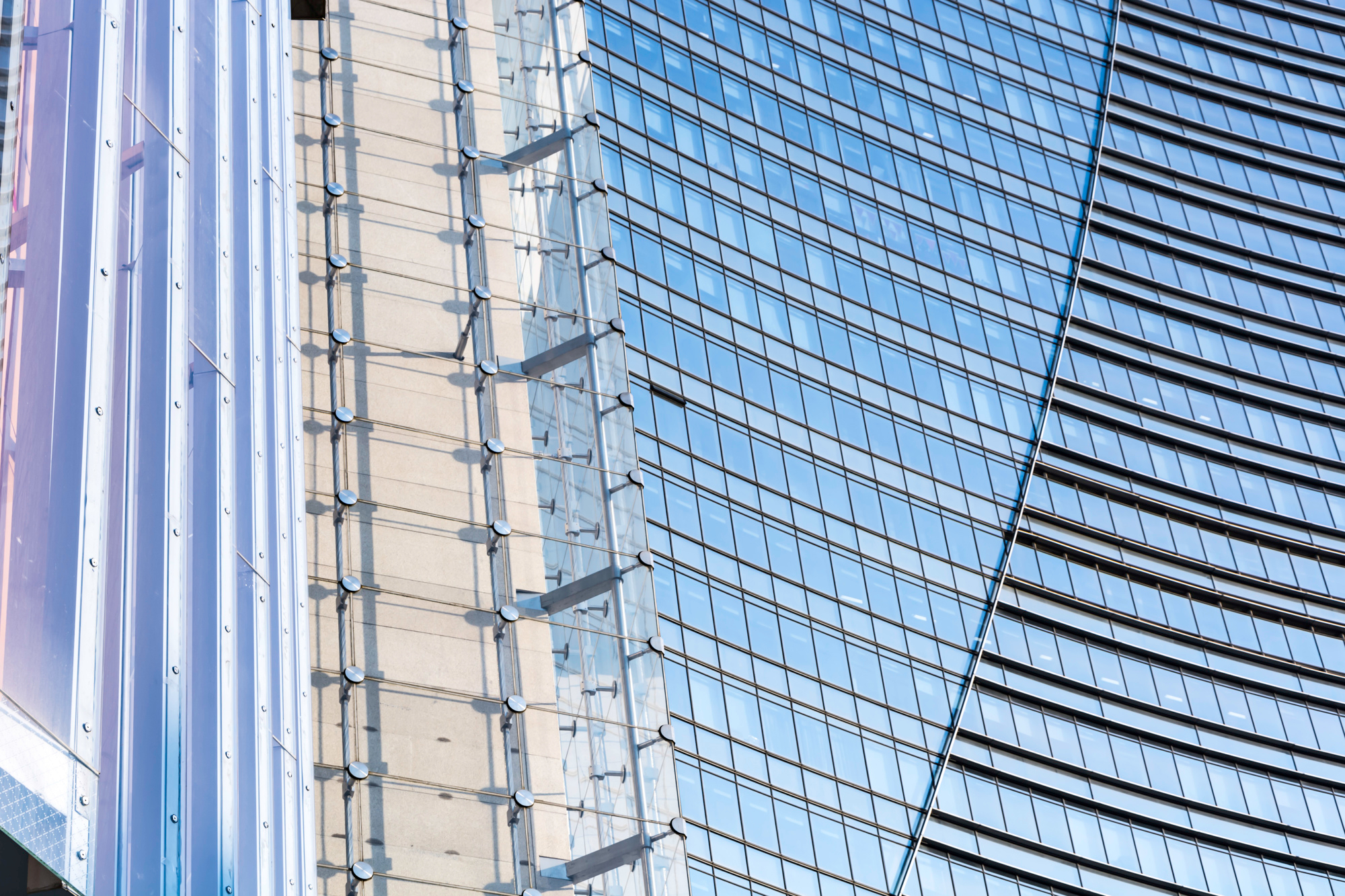
Look at any modern city skyline. Gleaming towers of glass seem to defy gravity, stretching hundreds of feet into the air. But the massive glass wall on the tallest skyscraper isn’t actually holding the building up. In fact, it’s just hanging there, like a giant, high-tech curtain.
This is the core idea behind a building facade system known as the “curtain wall.” Architects call it this because the entire exterior wall hangs from the building’s main structure, much like a curtain hangs from a rod above a window. It doesn’t support the weight of the floors or the roof; it only has to support itself and stand up to the weather.
Think of a modern building as having a skeleton and a skin. The real strength comes from an internal frame of steel or concrete—the skeleton—that does all the heavy lifting. The curtain wall is the building’s high-performance skin, a lightweight layer designed for looks and protection, not for brute force. This separation freed architects from structural constraints, allowing for the floor-to-ceiling views, light-flooded interiors, and sleek aesthetics that define our cities.
The Raincoat for a Building: What Is a Curtain Wall, Really?
For most of history, a building’s walls did two jobs: they held up the roof and kept the weather out. But modern skyscrapers play by a different set of rules by separating these tasks. The internal frame handles the structural load, leaving the exterior to be a protective skin.
This outer skin is what professionals call a curtain wall. Because it doesn’t support the building’s weight, it’s known as a non-load-bearing structure. Its main job is to act as a high-performance barrier against wind, rain, and temperature changes—think of it as a sophisticated raincoat for the building. This lightweight aluminum frame facade system is engineered to protect everything and everyone inside from the elements while only needing to support its own weight.
This division of labor didn’t just change how buildings stand up; it completely transformed the way they feel to be inside, paving the way for a new era in architectural design.
More Light, Better Views: How Curtain Walls Create Our Modern World
Separating a building’s skeleton from its skin solved a problem that had frustrated architects for centuries: how to let in more light. In a traditional, heavy wall that holds up a building, every window is a hole that weakens the structure. This is why older stone and brick buildings usually have smaller, separate windows—the walls simply couldn’t support massive openings. The desire for a sun-filled room was always in a fight with the laws of physics.
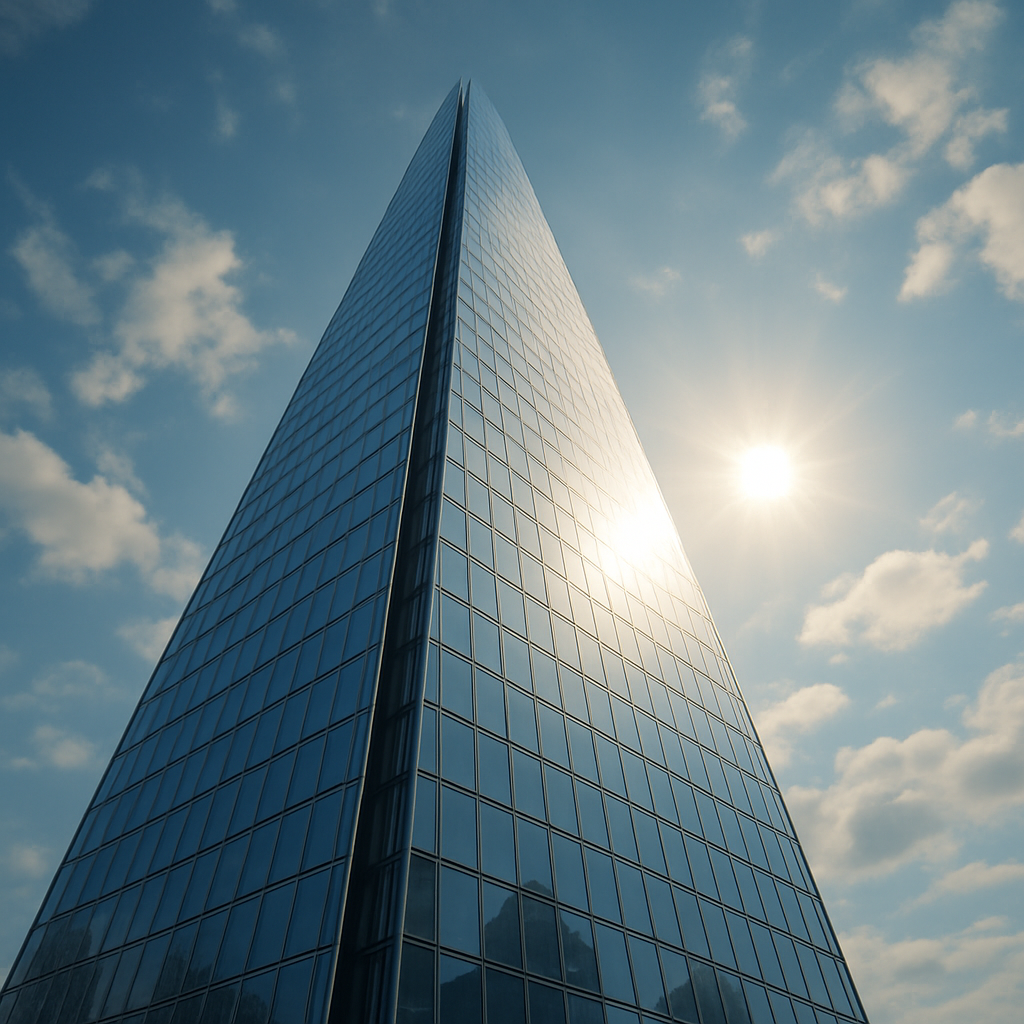
Curtain walls, however, completely flip this logic. Because they don’t carry any of the building’s weight, they can be made almost entirely of lightweight materials like glass. This is the secret behind the breathtaking, floor-to-ceiling windows and panoramic views you see in modern apartments, hotels, and offices.
This newfound freedom gives so many modern buildings their sleek, futuristic look. Instead of being limited to heavy masonry, designers can create seamless facades using vast panels of glass held in a slender aluminum grid. And modern glass provides more than just a view; it’s often high-tech, with special coatings and layers that help keep the building comfortable year-round, representing a huge step forward in improving the thermal performance of glass facades. The result is the gleaming city skyline we know today, but not every building with a lot of glass uses a true curtain wall.
Is It a Curtain Wall or Something Else? Spotting the Key Differences
Not every glass-covered building uses a curtain wall. Architects have a few different tools for creating glassy facades, and learning to spot the main two alternatives—the window wall and the storefront system—is easy once you know what to look for.
The most common look-alike on mid-rise residential towers is the window wall. Instead of hanging like a single sheet over the face of the building, a window wall system is installed between the concrete floor slabs on each level. This creates a distinct, stacked appearance. If you can clearly see a strong horizontal band of concrete or metal at every floor line, you are likely looking at a window wall.
A true curtain wall, by contrast, creates a more seamless, continuous skin. The frame is installed on the outside of the building’s floor structure, often creating an unbroken vertical look that soars up the building. This is the key visual difference: a window wall sits inside the floors, while a curtain wall hangs in front of them.
Finally, there’s the storefront system. This one is the easiest to identify because you’ll almost never find it above the first or second story. As the name suggests, it’s designed for ground-level applications like retail entrances and lobbies. It’s a lighter-duty system built to handle foot traffic, not the high winds and harsh weather found on the 30th floor. While all three use glass and metal, their placement on the building tells the real story.
Meet the ‘Bones’ of the Glass Skin: Mullions, Glazing, and Spandrel Panels
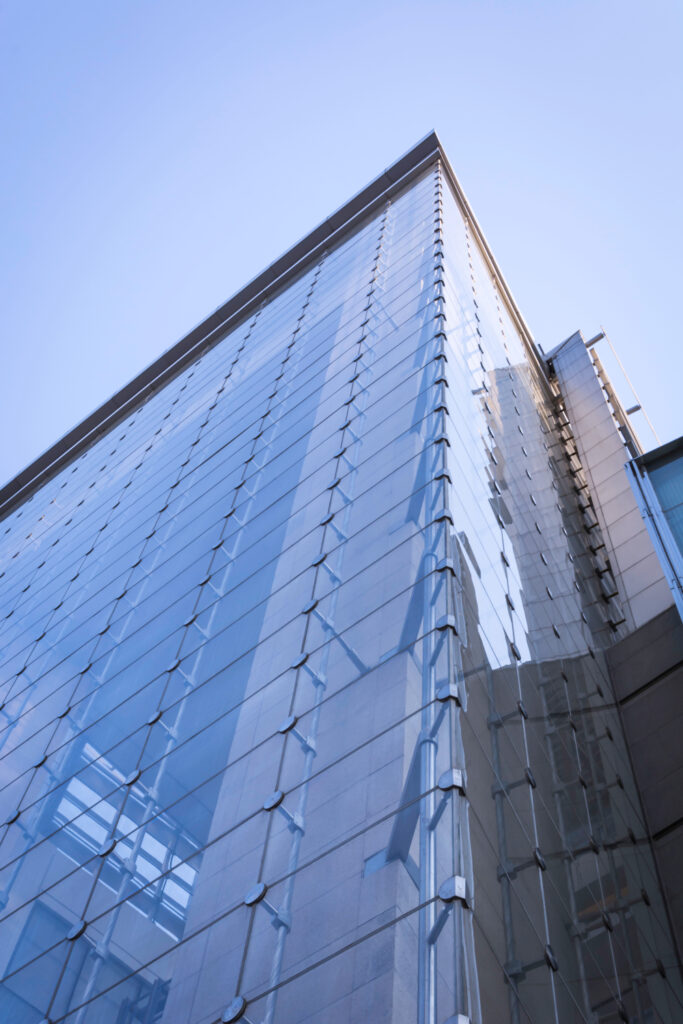
From a distance, a curtain wall can look like a single, seamless sheet. But get closer, and you’ll see it’s a highly organized grid. The metal beams that form this framework—both the vertical and horizontal ones—are called mullions. Think of them as the lightweight skeleton for the glass skin, creating the strong grid that holds everything in place. The large glass panels that fit into this frame are known in the architectural world as glazing.
This system also solves a clever visual problem: how to hide the building’s actual floors and columns. If the whole wall were transparent, you’d see the messy edges of concrete slabs and structural beams. To maintain a sleek, uniform look, architects use special opaque panels called spandrel glass. This is simply glass that has been made non-transparent, often with a ceramic coating on the back, to perfectly conceal the structure behind it. It’s a design trick that creates the illusion of an all-glass tower.
Together, these parts work as an integrated system. The mullions provide the structure, the glazing provides the light and views, and the spandrel glass provides the camouflage. Understanding these individual components helps explain how these massive facades are assembled so efficiently.
LEGOs on a Skyscraper: How Giant Glass Walls Are Installed So Quickly
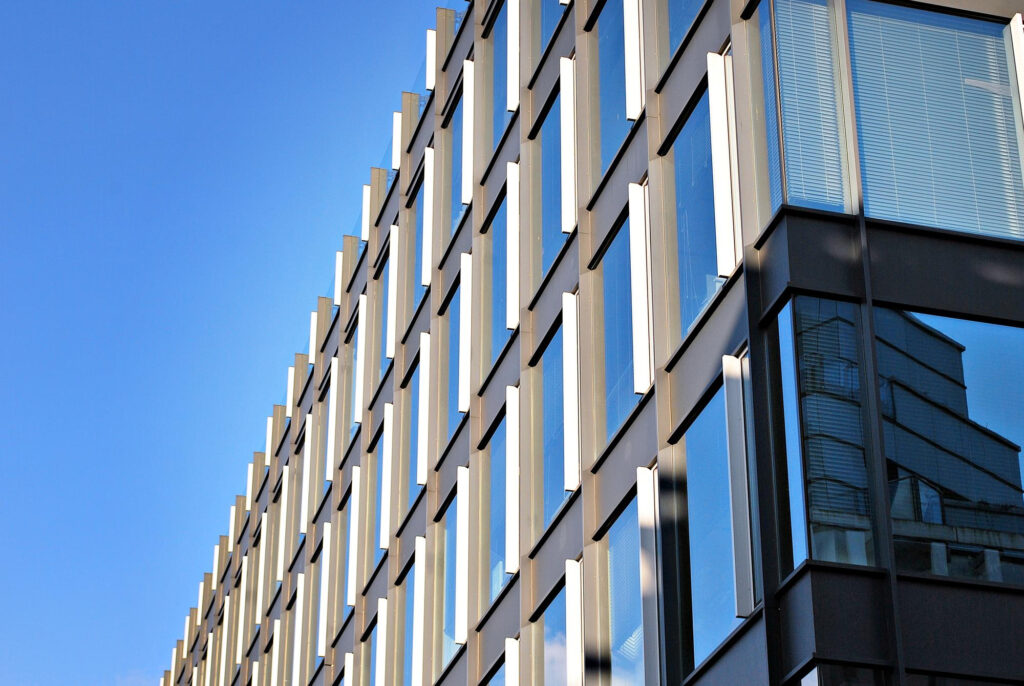
Assembling a complex grid of metal and glass hundreds of feet above a busy street seems like an impossibly slow task. Yet, entire floors of modern skyscrapers can be wrapped in their glass skin in just a few days. The secret to this speed lies in the construction method, which comes in two main flavors.
Crews on-site can use one of two primary approaches: the Stick-Built System or the Unitized System.
- Stick-Built: The frame is assembled piece-by-piece—or stick-by-stick—directly onto the building. First the mullions, then the glazing. This is like building a model with individual LEGO bricks. It’s flexible and great for smaller, more detailed projects.
- Unitized: Large, completed panels, often one or two stories tall with the glass already installed, are built in a factory. These massive units are then lifted by a crane and simply locked into place. This is like snapping a pre-built LEGO wall section onto your model.
For tall towers, the unitized method is a game-changer. By manufacturing the panels in a controlled factory setting, quality is higher and work can proceed regardless of weather. Most importantly, it allows construction crews to enclose a building far more rapidly, explaining how those gleaming towers can rise and get skinned so quickly.
A High-Tech Shield: How Curtain Walls Protect Buildings from Weather
Beyond rapid installation, a curtain wall’s most critical job is to serve as a building’s primary shield against the elements. This glass-and-metal skin faces everything from hurricane-force winds to torrential downpours and extreme temperature swings. Unlike a simple brick wall that relies on brute force, a curtain wall is an engineered system that cleverly manages these forces rather than just blocking them. It’s less like a fortress wall and more like high-performance outdoor gear.
When it comes to water, modern curtain walls operate on the principle of a quality raincoat: it’s not just about stopping water, but managing it. While the outer seals form a strong first line of defense, the system is designed with the expectation that a little water might get past. Tiny, hidden channels within the aluminum frame act as an internal drainage system, collecting any rogue moisture and safely guiding it back outside. This provides a far more reliable solution than trying to create a single, perfect, impenetrable seal.
Just as important, a curtain wall is designed to move. Tall buildings aren’t rigid; they sway slightly in the wind, and their materials expand and contract with heat and cold. If the glass skin were completely stiff, these movements would create immense stress, causing panels to crack and seals to fail. Instead, the aluminum frame is engineered with joints that allow it to flex and slide just enough to absorb these forces safely. This hidden dynamism is what keeps the building’s envelope secure and watertight through every season.
Seeing Your City Like an Architect
A glass skyscraper is no longer a fragile, impossible structure. It is a strong internal skeleton holding up the floors, wrapped in a separate, high-tech skin—a principle that is central to any modern guide to building envelope design.
This division of labor allows architects to create buildings that feel boundless, flooding interiors with natural light and offering panoramic views. The system, often prefabricated by a specialized curtain wall company, gives buildings their sleek aesthetic while protecting them from the elements.
On your next walk downtown, put this perspective into action. Find a glass-faced building and look closely. Can you spot the grid of metal mullions holding the glass? Notice how it appears to hang on the building’s frame rather than hold it up. Try to distinguish the vision glass you see through from the opaque spandrel glass hiding the floors. The urban environment is a gallery, and you now have the insight to appreciate its most impressive works.
Leave a Reply