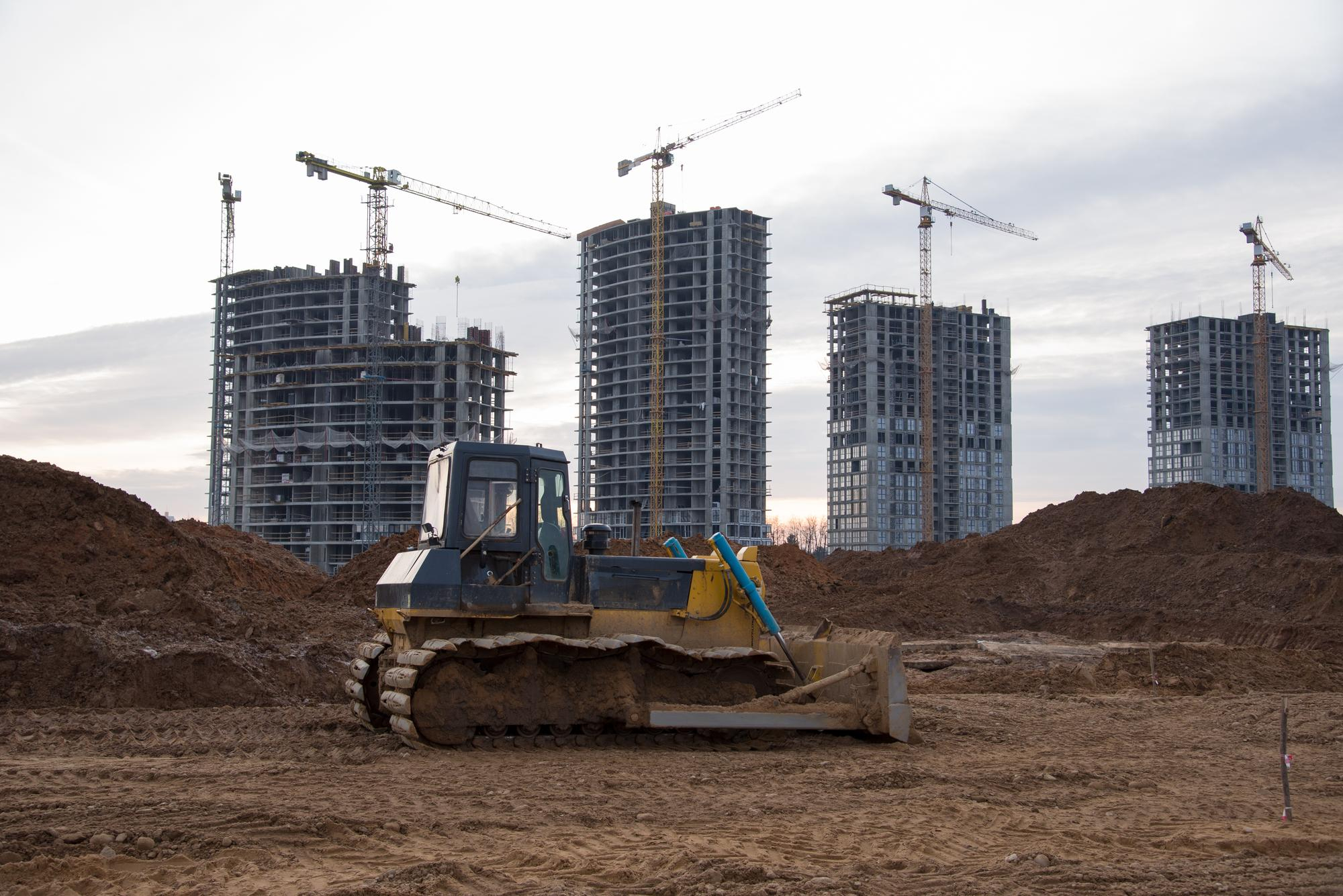
Everyone assumes a bigger engine is what makes a 40-ton truck powerful. They’re wrong. If you’ve ever struggled to get your car moving on an icy hill, you’ve felt the real challenge. Now, imagine your car weighs as much as ten elephants and the ‘hill’ is a sea of mud. The secret to conquering that problem isn’t just raw power; it’s a piece of specialized technology working silently behind the engine.
The biggest battle for heavy equipment is simply getting started. Think about trying to ride a bicycle up a steep hill while carrying a huge backpack—you need to push off perfectly just to get going. For a construction truck, that “backpack” can weigh over 80,000 pounds. Overcoming this immense inertia without stalling or spinning the wheels is the transmission’s first and most critical job.
Once moving, the punishment continues. Your car might shift gears a few dozen times on your way to work, but a construction vehicle endures a much harsher daily routine. It’s a brutal cycle of constant starting, stopping, and crawling under full load, often hundreds of times per day. In practice, this relentless stress is why the durability of automatic transmissions in this environment is paramount.
A scaled-up car transmission would simply tear itself apart under these conditions. It isn’t designed for the force required to get a massive load moving or the fatigue of doing it all day long. This is where purpose-built engineering becomes non-negotiable. The proven Allison transmission benefits stem from a design that anticipates this exact punishment, delivering the controlled power and reliability needed to survive on the world’s toughest job sites.
The Secret to a Stall-Proof Start: How a Fluid ‘Clutch’ Works
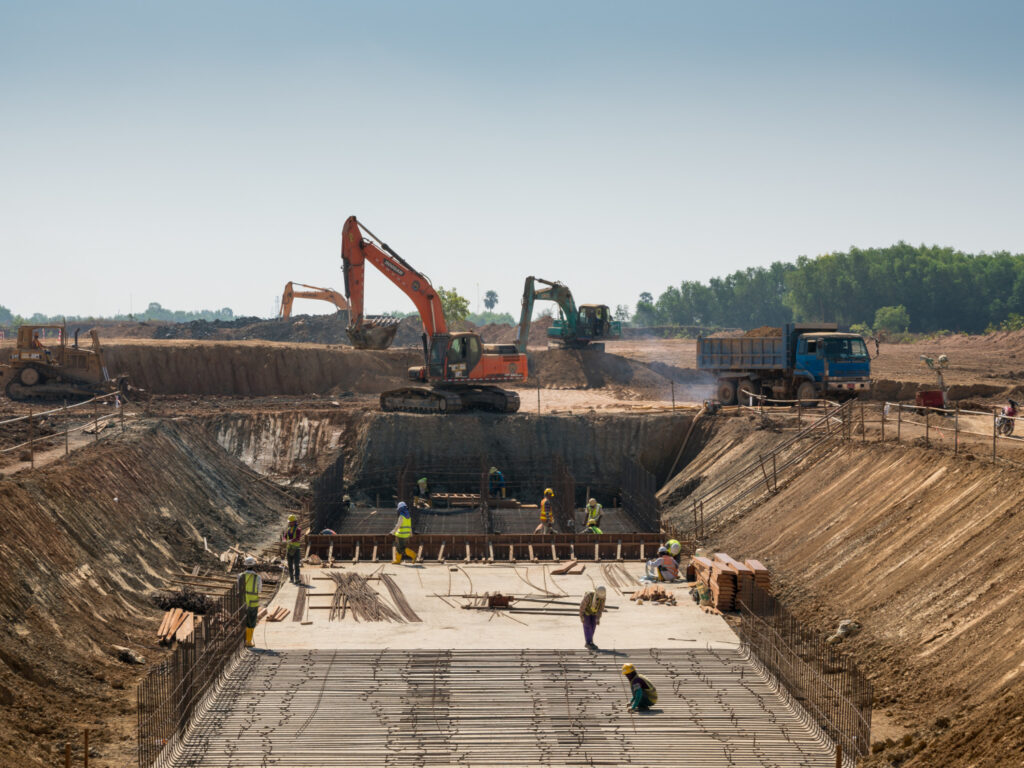
Getting a massive truck moving from a dead stop, especially on a muddy or uneven job site, requires incredible force. If you simply connected the powerful engine directly to the wheels, it would likely lurch forward and stall, just like a car when you pop the clutch too fast. Allison automatics solve this problem with a brilliant piece of engineering called a torque converter.
The secret is that there’s no rigid mechanical clutch. Instead, a torque converter acts as a fluid coupling. Imagine two fans facing each other inside a sealed, oil-filled case. One fan is connected to the engine, and the other is connected to the wheels. When the engine spins its fan, the moving fluid makes the other fan spin. Because there’s no solid link, the engine can keep running even if the wheels are completely stopped.
Beyond just preventing stalls, the torque converter provides a hidden “power boost.” When the driver hits the accelerator from a standstill, the fluid dynamics inside the converter actually multiply the engine’s turning force. This gives the truck a smooth but mighty surge of power right when it’s needed most, helping to overcome the immense weight and get rolling without drama.
This initial surge of power is a cornerstone of Allison performance and is key to solving traction issues on uneven job sites. By delivering amplified force smoothly to the wheels, the torque converter dramatically improves off-road performance and allows a fully loaded truck to start moving up a steep grade with confidence. But getting started is only half the battle; keeping that momentum is just as critical.
Why Allison Transmissions Never Lose Momentum on a Climb
Getting a heavy truck moving is one thing, but keeping it moving up a slippery grade is another challenge entirely. Think about shifting gears on a bicycle while climbing a steep hill—for a split second, as the chain moves, you lose power. This is called power interruption. In a massive truck carrying tons of material, that brief pause can be enough to lose crucial momentum, causing the vehicle to slow, slip, or even roll backward.
This is where the difference between an Allison vs a manual transmission in a construction vehicle becomes crystal clear. Allison’s patented Continuous Power Technology™ is engineered to eliminate that dangerous power interruption. Instead of disconnecting power to shift, it smoothly transfers it from one gear to the next. It’s like having a magical bicycle that can change gears instantly without you ever stopping your pedal stroke.
The result is a truck that feels like it has one long, seamless gear, allowing it to accelerate steadily up even the muddiest and steepest grades without losing traction. This is one of the key Allison 4000 Series features that operators rely on. On a treacherous construction site, this isn’t just about performance; it’s a critical safety feature that gives the driver superior control when it matters most.
This ability to deliver uninterrupted power to the wheels is foundational, but it also opens the door to another incredible capability. What happens when a vehicle needs to power more than just its wheels? A cement mixer, for example, has to drive and spin its heavy drum at the same time, which requires a special kind of power.
How One Transmission Powers a Whole Concrete Mixer
A concrete mixer is the perfect example of a vehicle with two demanding jobs. It must navigate city traffic and construction sites just like any other truck, but it also has to continuously spin a heavy drum full of concrete. So how does a single engine provide power for both the wheels and that massive, rotating mixer?
The solution is a clever piece of engineering called a Power Take-Off, or PTO. Think of a PTO as a special accessory port on the transmission that can redirect some of the engine’s power to run onboard equipment. Instead of needing a separate, clumsy engine just for the mixer drum, the entire truck runs off one integrated and reliable system. The availability of different Allison transmission Power Take-Off (PTO) options ensures the right amount of power is available for the specific job.
When a concrete truck is driving, the Allison transmission sends power to the wheels. But when it’s time to mix or pour, the PTO engages to send power to the hydraulic system that turns the drum. This dual-power capability is a hallmark of the brand’s vocational models, and it’s a key reason you’ll often find an Allison in this application. Answering the question of which Allison series is for concrete mixers, this is a primary function of the rugged 4000 Series, a cornerstone of any Allison transmission vocational model guide.
Ultimately, this integration means fewer points of failure and more efficient operation. Having the muscle to climb hills and the auxiliary power to run equipment is one part of the equation. But coordinating all these tasks requires intelligence, which brings us to the electronic brain behind the brawn.
The ‘Brain’ in the Gearbox: How Smart Software Saves Fuel
That intelligence isn’t just a figure of speech. While older transmissions were purely mechanical, modern Allison automatics are controlled by a sophisticated onboard computer. This electronic “brain” is what allows a driver to use a simple push-button selector instead of wrestling with a complex stick shift. It constantly analyzes information like engine speed, vehicle weight, and how steep the road is to make perfect decisions every single moment.
Think of this system as an expert driver who instantly adapts to any situation. It knows not to shift gears in the middle of a steep, slippery climb, and it understands when to let the engine relax on a flat, open road. This adaptive ability goes far beyond a simple pre-programmed shifting pattern; it’s a dynamic response to the real-world demands placed on the truck.
This is exactly how does Allison FuelSense® 2.0 work at its core. It’s a software package designed to actively hunt for opportunities to save fuel. By analyzing the driving situation, it makes hundreds of micro-adjustments—like shifting at the most efficient engine speed or coasting when appropriate—that add up to significant savings. For companies focused on improving construction fleet fuel efficiency, these smart Allison transmission features are a game-changer.
Ultimately, this smart technology does more than just save money on fuel. By ensuring the transmission is always in the right gear at the right time, it reduces strain on the entire truck and provides a smoother, less fatiguing experience for the operator. This direct link between intelligent control and equipment durability is crucial, which leads us to why a smoother ride for the driver often means a longer life for the truck.
Why a Smoother Ride for the Driver Means a Longer Life for the Truck
That smooth, controlled operation isn’t just about driver comfort; it’s a critical layer of protection for the entire vehicle. Anyone who has driven a manual car knows the jarring “thump” of a poorly timed shift. Now, magnify that force by the weight of a 40-ton dump truck. These powerful jolts, known as driveline shock, send a damaging shockwave through every component, from the engine to the axles. This is a common point of comparison when looking at an Allison vs a manual transmission in demanding environments.
An Allison fully automatic, by its very nature, acts as a buffer against this abuse. Because the torque converter uses fluid—not a hard mechanical clutch—to transfer power, it naturally dampens these harsh forces. The transmission’s smart software also ensures there are no missed shifts or clumsy engagements. This seamless operation is a key factor in the superior durability of automatic transmissions in heavy equipment, as it prevents the most common cause of premature wear and tear.
This protection extends far beyond the transmission itself. By eliminating driveline shock, an Allison automatic reduces stress on the U-joints, axles, and even the engine mounts. Fewer violent jolts mean fewer surprise breakdowns and less time spent in the shop for repairs, which directly impacts the maintenance schedule for vocational transmissions. A truck that runs smoothly is a truck that stays on the job site, working and earning.
Ultimately, by taking the burden of perfect shifting off the operator, the transmission allows them to focus completely on the task at hand—navigating a crowded work area or precisely positioning their truck. This constant, silent protection does more than just move the truck forward; it acts as an invisible guardian for the equipment and the operator. It’s like having an unseen engineer on every job site.
The Unseen Engineer on Every Job Site
That massive dump truck on the muddy hill is no longer a mystery of just raw power. You now understand the hidden intelligence at work: how a fluid coupling gets it moving without a jolt, how uninterrupted power lets it climb without faltering, and how a separate power source can lift tons of rock. You’ve seen behind the curtain of heavy-duty equipment and can now spot the difference between muscle and mastery.
Your next step is simple: observe. The next time you’re near a construction site or beside a rumbling cement mixer, look closer. Notice the incredible grace with which these giants operate in tight spaces and tough terrain. That smoothness isn’t an accident; it’s a direct result of the advanced industrial transmissions you now understand, a key component in all types of construction machinery.
You’ll never see these vehicles the same way again. Instead of just big engines and big tires, you now recognize the sophisticated engineering heart—the Allison transmissions—translating brute force into controlled, reliable work. You’re now in on the secret of how the modern world gets built, one perfectly delivered shift at a time.
Leave a Reply